About Lantern & Bone
The story of why we make what we make, and how we make it.
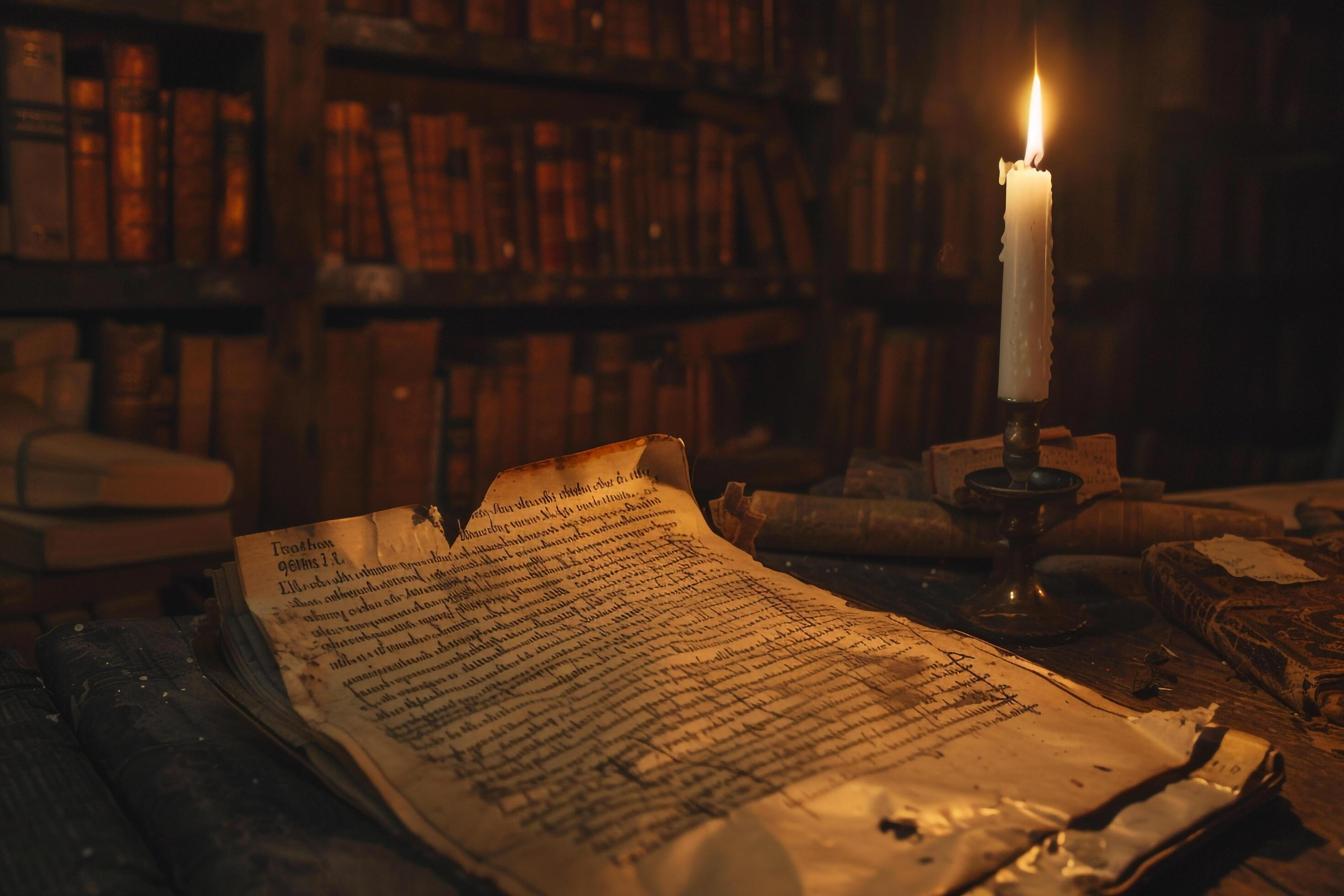
Lantern & Bone is a publication for those who like their histories long, their nights quiet, and their facts checked twice.
The Mission
We make sleep documentaries on the strange and forgotten edges of the British and European past — the rectories and the witch trials, the chronicles and the cold cases, the figures who slipped between the cracks of the official record. Each episode is roughly eight hours. Each is researched against primary sources. Each is read slowly, in a voice meant for the dark.
The subjects we choose share a quality: they are stories that have been told badly. The Borley Rectory affair reduced to jump scares. The Essex witch trials flattened into a morality play. The lost villages of England mentioned in passing, if at all, in county histories. We return to these stories with the patience they deserve, the patience of someone sitting down to read a parish register by lamplight.
The Production Approach
We record in the small hours, when the house is quiet and the only light is the monitor's glow. The narration is unhurried. A typical chapter runs between thirty and forty minutes, paced to the rhythm of a long-form essay rather than a broadcast documentary. There are no cliffhangers, no recaps, no pressure to maintain attention. The assumption is that the listener is already in bed, already half-asleep, and needs only a trustworthy voice to keep them company until morning.
The sound design is minimal — a room tone, occasionally a distant rain, never music that insists upon itself. We use ambient recordings from the locations themselves where possible: the wind in the Borley churchyard, the creak of floorboards in a Durham boarding house. These sounds are not effects; they are documents, recorded on site and used at low volume.
The Accuracy Commitment
This is the differentiator, and we do not treat it lightly. Every factual claim in every episode traces back to a primary source. We do not rely on secondary accounts, popular histories, or Wikipedia. We read the parish registers, the newspaper archives, the court records, the diaries, the correspondence.
Where sources contradict — and they often do — we say so. Where the record is incomplete, we say so. Where we have made an inference, we mark it as inference. The Sources page for each episode lists every primary document consulted, with archive references and links where available.
We believe that transparency builds trust, and that trust is the only currency worth accumulating in a field so often contaminated by bad faith.
Who This Is For
Lantern & Bone is for listeners who find comfort in the past. For those who cannot sleep without something playing, but who are tired of true crime, of political podcasts, of the endless churn of the news cycle. For readers of county histories and parish magazines. For visitors to the British Library who go to the manuscripts reading room rather than the exhibition hall. For anyone who has ever sat in a churchyard at dusk and felt the weight of the stones.
It is also, we hope, for the curious: those who know nothing of the Essex witch trials but would like to learn, provided the learning comes without sensationalism, without moralising, and without the condescension that so often accompanies popular history.
On AI and Narration
We use AI-generated narration. We say this openly because transparency matters, and because we believe the quality of the research and the care of the writing matter more than the origin of the voice. The narration is generated from scripts we write, edit, and fact-check ourselves. No episode is produced without human oversight at every stage.
The voice is calm, Northern, unhurried. It does not perform. It reads. If you find it strange at first, we suggest giving it ten minutes. The strangeness fades, and what remains is a voice that does not demand attention — only companionship.
"History is not the past. It is the method by which we approach the past, the discipline by which we distinguish between what happened and what we wish had happened." — E. H. Carr, What Is History?